Tuesday, May 6, 2008

Ghosts of Gettysburg. media literacy. Understanding technology to protect history

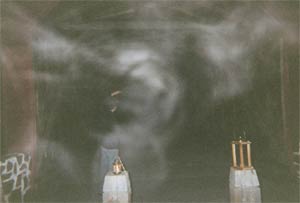
Some of my fondest childhood memories are of the hiking trips my father would take us around the Gettysburg battlefield. Studying the battles of this American bloodbath is a necessity to any American education. Lincoln's address is one of the greatest speeches to grace our nation. So why am i asking you all to rethink it? Well I'm not really. However when I see these History and Sci-fi channel shows capturing the "ghosts" of Gettysburg, I want to laugh out loud. The appeal of these ghost tours is understandable, we liked to be scared, and mystery is extremely attractive to any adventurous purpose. When this type of phenomena is experienced purely for entertainment issues, I have no problem. However when its used to spit on the true reasons for studying this American moment, i take strong issue. Check out these rediculous "ghost photos"


The media literate student would realize that these are merely the results of an imperfect device called a camera. The lens reflects a great deal of light, and has been the source of "paranormal" for decades. Today's lecture comes from a you tuber calling himself captain disillusion. This guy makes a fun internet show that debunks digital pictures and movies that have been fooling the mainstream world. By understanding basic principles of media technology we can avoid inspecting things with poor perspective. This guy can get a bit obnoxious, but hey he gets his point across better then most technology teachers do.

a.foolish.man.listens.to.the.enchanting.a.wise.man.listens.to.the.truth.

Dangerous revisionism: Why people believe weird things.

Many of us carry beliefs that seem weird to others. Some grounded in science, others not so much. In the realm of Historical studies, we have been inundated with revisionist inquiry. Much of this has provided a renewed perspective (the psychological pains of Lincoln) where as other revisionists have given way to purely inaccurate propaganda (most Oliver Stone works).
Holocaust denial is a prime example of such nonsense. More recently, the 9-11 truth movement has recycled the same cognitive processes of those who originally fathomed the JFK conspiracy theories. Why do people believe such strange things? The answer for this is not all that different to the question of why do people believe in things like psychics, Dowsing, Astrology, and other humbug. Michael Shermer's explanation seems appropriate, "In the absence of science incomplete information combines with the power of suggestion." The perfect explanation to that "back and to the left magic bullet theory."Michael Shermer constantly addresses these issues in his skeptic publications, which is a fun read if nothing else. It should be noted that he may have a slight bias in debunking issues as it has made him a living. Still, Today's lecture is fun and very applicable to modern education.

Why people believe strange things


what.conspiracy.are.you.talking.about.